
Finite Jest
"Wallace wrote within a sphere of literary white masculinity that assumed to itself a kind of generalized irony about everything...and also assumed itself to be terminal and fatal."

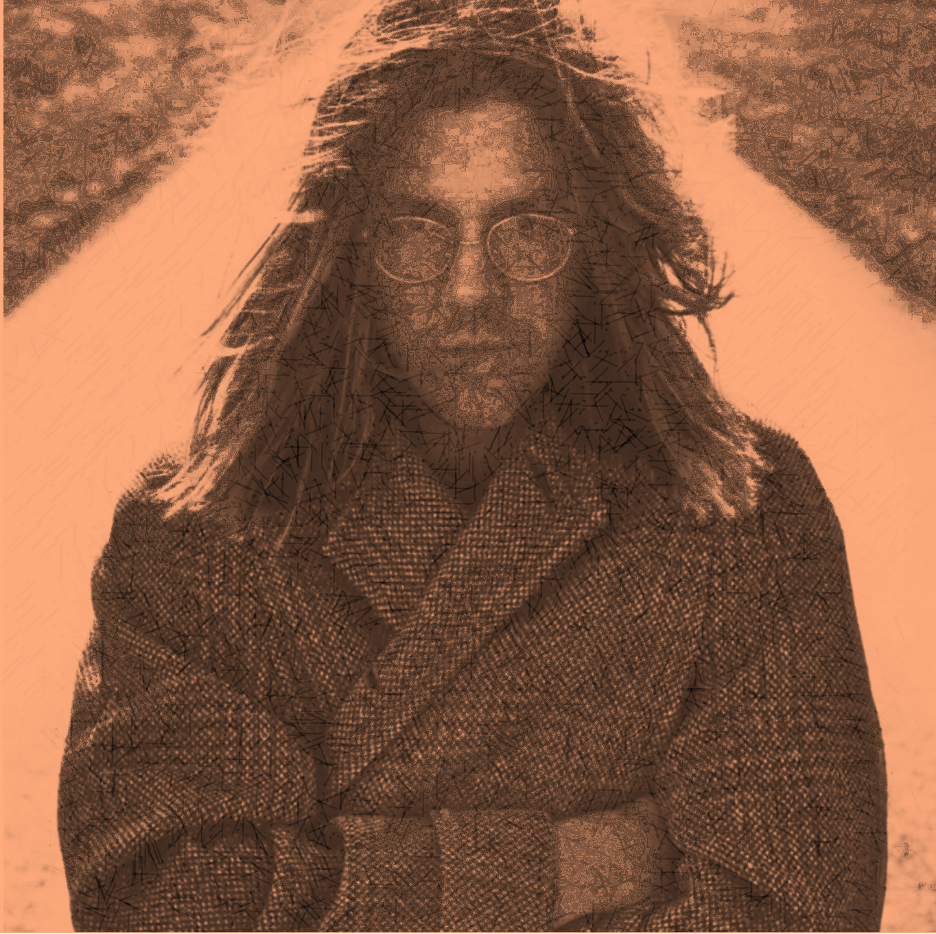
January 2026 marks the thirtieth anniversary of David Foster Wallace’s Infinite Jest. This reflection on Wallace and whiteness is an excerpt from one of the essays in my 2019 book White Flights: Race, Fiction, and the American Imagination (the essay itself is called “What Is the Point of This Way of Dying”). As you will see below, I’ve always had complicated feelings about DFW. I think of him as one of the great artistic heroes of his generation (which is just about a decade removed from my generation, both now erroneously lumped together as “Gen X”) and as a limited, bigoted, complacent thinker whose vision wasn’t nearly as broad or capacious as he thought it was.
David Foster Wallace wanted us to know we are loved. This isn’t hyperbole; it’s the last sentence of his novella “Westward The Course of Empire Takes Its Way”: “You are loved.” Instead of conspiring with the reader—which he believed was always actually condescending to the reader—he wanted to break metafiction’s frame of permanent irony (what Schlegel once called “permanent parabasis”) and restore to it an aesthetic of emotional directness and intimacy apart from realism. This was the project he laid out, in no uncertain terms, in “Westward” (which rewrites and savagely satirizes John Barth’s metafiction masterpiece “Lost in the Funhouse”) and in “E Unibus Pluram: Television and US Fiction,” a manifesto he began writing in the late 1980s and finally published in complete form in 1993.
The pervasive cynicism Wallace detected in himself and other writers his age (he was born in 1962, which makes him either a Shadow Boomer or Gen X, depending whom you ask) came from two sources: the doctrines of postmodern fiction, as defined by Barth, Gaddis, Pynchon, Barthelme, and DeLillo; and TV, which made postmodern narrative technique popular, fun, and inescapable. “Pop-conscious postmodern fiction,” Wallace writes in “E Unibus Pluram,” “has made a real attempt to transfigure a world of and for appearance, mass appeal and television; on the other hand, televisual culture has somehow evolved to a point where it seems invulnerable to any such transfiguring assault.” The tools of pop postmodernism, “irony, poker-faced silence, and fear of ridicule,” are effective but also “agents of a great despair and stasis in US culture.” He ends the essay with what in retrospect may be the saddest passage he ever wrote, both an apologia and a call to arms:
It’s entirely possible that my plangent noises about the impossibility of rebelling against an aura that promotes and vitiates all rebellion say more about my residency inside that aura, my own lack of vision, than they do about any exhaustion of US fiction’s possibilities. The next real literary “rebels” in this country might well emerge as some weird bunch of anti-rebels, born oglers who dare somehow to back away from ironic watching, who have the childish gall actually to endorse and instantiate single-entendre principles. Who treat of plain old untrendy human troubles and emotions in US life with reverence and conviction. Who eschew self-consciousness and hip fatigue. These anti-rebels would be outdated, of course, before they even started . . . Real rebels, as far as I can see, risk disapproval . . . The new rebels might be artists willing to risk the yawn, the rolled eyes, the cool smile, the nudged ribs, the parody of gifted ironists, the “Oh how banal.” To risk accusations of sentimentality, melodrama. Of overcredulity. Of softness.
In the decade since Wallace’s suicide, this story—the literary history of postirony—has been told and retold, with a small core of protagonists (and a few antagonists): how in the mid-1990s Wallace, Jonathan Franzen, George Saunders, Ben Marcus, and Rick Moody, plus Dave Eggers on the West Coast, invented post-postmodern fiction, a new literature of feeling. “The thing on the table was emotional fiction,” Saunders said in an interview with The New York Times Magazine in 2013, describing conversations with this group twenty years before. “How do we make it? How do we get there? Is there something yet to be discovered? These were about the possibly contrasting desire to: (1) write stories that had some sort of moral heft and/or were not just technical exercises or cerebral games; while (2) not being cheesy or sentimental or reactionary.”
Did it work? Did it happen? According to most sources it did. Saunders is one of the most beloved American writers today, and Wallace is celebrated as a kind of secular saint, not just an artist but a paragon of fearsome difficulty in the service of kindness and humility, as exemplified in his famous 2004 speech to the graduates of Kenyon College, “This is Water”: “If you really learn how to pay attention . . . . it will actually be within your power to experience a crowded, hot, slow, consumer-hell type situation as not only meaningful, but sacred, on fire with the same force that made the stars.”
I always find myself thinking and writing about him from a point of unfeeling admiration. Which is also to say that I take him at his word, as he put it in “E Unibus Pluram,” that his work is not actually fully successful because he is not only resident inside the aura but, being inside it, was incapable of fully naming it or understanding it. This is how I understand his way of describing the possibilities of American fiction, particularly the tension between postmodern skepticism and “single entendre principles,” without mentioning the American writers most actively engaged with those questions in the late 1980s and early 1990s: John Edgar Wideman, Ishmael Reed, Toni Morrison, Tony Kushner. Or even Trey Ellis: a black writer exactly Wallace’s age, whose first novel, Platitudes, published by Vintage Contemporaries in 1988 to some acclaim, shares so many of his obsessions that reading it now is like seeing a convex mirror-image of The Broom of the System:
Donald says he’s got dibs on the Wang, but Andy says, Homo you don’t, and just sits at the terminal, turns it on just to bug Donald, because Andy really likes the DEC VeeDeeTee better. Earle sits next to Andy on the right, like he always does, and Janey walks in, her books over her chest, and sits right in front of Andy, like she always does…Janey’s already confused—she’s more the artsy type—and raises her hand like a Nazi and says, Commander Considine, Commander Considine, but he just keeps on saying junk about making sure that the FOR isn’t too big or else the NEXT loop might become infinite, which is obvious, and now Janey’s arm is tired and hooked over her head like her hairband and she’s waving at the Commander from over her other ear and breathing real loud on purpose, and every time she waves, her chest stretches her sundress, and Earle wouldn’t be surprised if her boobs one day just pop right through the fabric like sinus medicine capsules pop through that foil backing.
Wallace was unquestionably—he would have admitted it, I’m guessing, if anyone asked—writing within a sphere of literary white masculinity that assumed to itself a kind of autonomous, generalized, even infinite irony about everything, including itself, and also assumed itself to be terminal and fatal. From this vantage point, which often crosses over into a kind of spiritual vocation, it’s easy to see how works by writers of color, or women, fall into a category called concerns-which-are-reflexively-dealt-with-by-other-means. In other words: race, and racism, as social phenomena, line the periphery of his consciousness but aren’t integral to his art. From this perspective, to describe his work in racialized terms would be credulous and beside the point, a category mistake. Imaginative autonomy, the default perspective of white writing as I’ve described it earlier in this book, was to DFW an absolute value, related to the nature of the universe itself: “Who on earth’s entitled to declaim about light sources too far out to get to?” he wrote in 1989 in Signifying Rappers, one of the very few times he addressed the subject directly. “The night sky’s spray of light is there, at a distance, for anyone to see and invoke. The heavens, that best chiaroscuro, are color-blind. Not so culture, race in the US present.”
There’s an important, if obvious, observation to be made here, not about race necessarily, but about DFW’s own project as he articulated it, as a turning away from postmodern cynicism toward a posture of belief for its own sake: Wallace was not interested in political paranoia, or the project of political satire, but in a kind of cosmic innocence, wonder, naivete, that subsumed politics; his own liberal politics were self-consciously bland and held at a distance, out of his disinclination to participate in the symbolic logic of the spectacle, as he illustrated with his brief, almost whimsical essay about September 11th, “The View From Mrs. Thompson’s.” If I had to describe his work in the terms and categories he himself used, I would say something like this (not an original observation): DFW took the “systems novel,” a term the critic Tom LeClair used to describe novels like Giles Goat-Boy, Gravity’s Rainbow, and Ratner’s Star, and made a system, an object, out of his own selfhood, the particularities of his own experience. This scene of experiencing self-as-universe occurs in so many places in his fiction it’s hard to choose just one, but try this passage from Brief Interviews With Hideous Men:
I all too quickly, as an adolescent, trying merely to masturbate in private, found out that my single fantasy of unknown seduction outside time required the very world’s population itself must be frozen by the single hand’s gesture, all of the world’s timepieces and activities, from the activities of yam farming in Nigeria to those of affluent Westerners purchasing blue jeans and Rock and Roll, on, on…
The gesture at the heart of Wallace’s work—particularly, and maybe necessarily, so, in light of his lifelong struggles with self-destructive emotions and impulses—was to make his ironizing self feel like a relaxed, expansive, endlessly interesting vantage point. His most characteristic pieces orient the self-system outward, in a blaze of generosity, humor, or good feeling. He seemed to believe, like Forster, that much human misery resulted from simple failures of connection, communication, understanding, as in the pivotal moment of Infinite Jest, where James Incandenza reveals he’s recorded his lethal film, The Entertainment, not out of a maniacal desire to kill the audience but because he’s never been able to find a way to communicate with his son Hal.
But peripheries are uneasy places, even if they firmly stay peripheries. The oddest passage of Infinite Jest—a book which is willfully odd at every turn—occurs early on, in the voice of a black woman, Clenette, about the abuse suffered by her friend Wardine. The entire segment is only about a thousand words, and doesn’t connect to any other aspect of the novel; it reads like a parody of a first-person narrative of inner city life:
But I know Reginald tell. Reginald say he die before Wardine momma beat Wardine again. He say he take his self up to Roy Tony and say him to not mess with Wardine or breathe by her mattress at night. He say he take his self on down to the playground at the Brighton Projects where Roy Tony do business and he go to Roy Tony man to man and he make Roy Tony make it all right.
According to his editors and Wallace himself, the original manuscript of Infinite Jest was nearly twice as long as the published book. Enormous, book-length sections were cut; why did this passage, not in any way part of the extant narrative, stay in? The idiom is stereotyped, exaggerated Ebonics; and Wallace had strong, distinctly racialized feelings about “correct” or Standard Written English, which he explained in detail in a Harper’s essay, “Authority and American Usage,” in 2000. This essay is notably different—harsher, more strident, and, in some ways, more cynical—than DFW’s earlier nonfiction. In it, he labels himself unreservedly a SNOOT (“Sprachgefühl Necessitates Our Own Ongoing Tendence”), a term left over from his childhood, a prescriptivist who believes in upholding SWE not because of its innate superiority, but because of the pragmatic necessity of maintaining a single communicative language for a democratic culture. In one of the essay’s many tangents, he rehearses a speech he’s given to African American students who, in his view, haven’t learned, or don’t want to learn, SWE sufficient to his standards:
I’m respecting you enough here to give you what I believe is the straight truth. In this country, SWE is perceived as the dialect of education and intelligence and power and prestige, and anybody…who wants to succeed in American culture has got to be able to use SWE. This is just How It Is. You can be glad about it or sad about it or deeply pissed off. You can believe it’s racist and unfair and decide right here and now to spend every waking minute of your adult life arguing against it, and maybe you should, but I’ll tell you something—if you ever want those arguments to get listened to and taken seriously, you’re going to have to communicate them in SWE, because SWE is the dialect our nation uses to talk to itself.
Earlier in the essay he makes an analogy between this argument, as a relation to power, and the impossibility, in his view, of allowing boys to wear skirts to school, even if the parent and the boy both believe skirts are objectively better than pants: “In modern America, any little boy who comes to school in a skirt is going to get stared at and shunned and beaten up and called a total geekoid by a whole lot of people whose approval and acceptance are important to him.” It could be a compelling statement of what used to be a normative belief system—call it liberal anti-pluralism—that positions itself at the rational center of a political sphere available to others only through certain conditions, or standards, of membership. In certain circles (those associated with Obama and his admiration of Reinhold Neibuhr, for example) it’s known as “realism,” though more radical thinkers like Roberto Unger would describe it as the essence of false necessity: staring at what exists and representing that stare as insight. Wallace’s language, in expected and unexpected places, is saturated with this cynical use of realism, a variety of code-switching meant to display, and also arbitrate, total linguistic fluency; and I can’t think of the Wardine section of Infinite Jest outside of this aesthetic posture, an elitist exuberance some people would call slumming. What lingers about this displaced fragment, over the novel as a whole, other than the voice and the sound, as if Wallace is spinning the dial on the radio?
Signifying Rappers came about while Wallace was living in Cambridge in the summer of 1989 with his former college roommate, the lawyer and future novelist Mark Costello; they wrote it in tandem, at the suggestion of the editor Lee Smith, as an argument for why hip hop should be taken “seriously.” (In a 2013 preface to the reprinted edition, Costello says the original title might have been “How Rap, Which You Hate, Is Not What You Think, and is Interesting As Hell, and If Offensive, A Useful Sort of Offensive Given What Is Happening Today.”) For Costello the book is an occasion for earnest reportage (a visit to a recording session in progress; a Slick Rick concert at a Roxbury high school) and pontificating on the political contradictions of Public Enemy. But Wallace dwells on the listening itself, and the absurdity of his listening, as a “white Boston male,” a proto-yuppie, a gentrifier:
Because serious rap has, right from the start, presented itself as a Closed Show…There’s an aura of cohesion-in-competence, of an exclusive and shared universe in the present rap relationship between black artists and black audience not enjoyed by a music especially of and for people of color in something like the past 80 years. To mainstream whites it’s a tight cohesion that can’t but look, from outside the cultural window, like occlusion, clannishness [sic], and inbreeding, a kind of reverse snobbery…Serious rap’s a musical movement that seems to revile whites as a group or Establishment and simply to ignore their possibility as distinct individuals…The music’s paranoia, together with its hermetic racial context, maybe helps explain why it appears just as vibrant and impassioned as it does alien and scary, to us, from outside.
For a writer so obsessed with reflexivity in all its forms, Wallace never seems to recognize how profoundly he’s being played: how he’s participating in what Ralph Ellison, in “On Bird, Bird-Watching, and Jazz,” called “a grim comedy of racial manners,” the mimetic dance of desire, resentment, projection and fantasy that has always characterized the American white relationship to black cool. The posture of Signifying Rappers is that of an ironized field report on an alien semiotics, not unlike Umberto Eco’s Travels in Hyperreality, with its pretend-serious hermeneutic exegesis of Disneyland; but for Wallace the pose can’t be as detached as he wants it to be. Hip hop makes him feel excluded, angry, and baffled, never more so than when he sees rappers playing his own game of postmodern evasion-and-replacement:
Serious rap’s so painfully real because it’s utterly mastered the special ‘80s move, the ‘postmodern’ inversion that’s so much sadder and deeper than just self-reference: rap resolves its own contradictions by genuflecting to them . . . A music less ‘against’ than simply scornful of the cold blank caucasian System of special hypocrisies can’t but be of compelling interest to those white of us who stand all scrubbed and eager at that magnifying impediment of glass that rappers—like all US young—have built themselves into. It may be, as avant-avant-gardists were arguing, gee, only 70 or 80 years back, that ‘self-reference’ itself is like anything that defines a genre, a Scene, a place-and-time—just another window, thick and unclean, bulletproof and parallax, where where you stand informs what you look at, where sound and gesture split and everything Outside’s quiet and everyone’s alone, and free.
It’s necessary to stay with DFW at this unhappy moment, this moment of frustration, because it’s precisely that: a failure of his most potent ability and fervent belief, a failure to connect, even a failure of reciprocal recognition or love, only a few months after he had finished the final edits on “Westward,” with that last line, “You are loved,” still firmly in place. “Westward” is a story-as-sample, plundering and mangling and re-using Barth’s text and his authorial persona, that is in DFW’s own description shamelessly hip-hop and ‘80s in its affect and style, but somehow he can’t see it. What he can see, at least in this moment, is his own whiteness: where “everything Outside’s quiet and everyone’s alone, and free.”
Signifying Rappers came and went in an instant, in 1990, likely because, for those who cared, there was much more nuanced and better informed criticism available; I never encountered it until it was reissued; but this passage contains the tablature for a generational affect of white sadness and antisocial isolation that only rarely, if ever, named itself in racial terms. In this way Wallace was, unironically, peerlessly, a fucking Nostradamus, not only the voice but the prophet of his generation. The mimetic effect of rap’s perceived rejection, I would venture to say, was to make white hipsters hermetic, congealed into a depressive pose, and even, in some cases, ironically racist. Or sometimes, as DFW was, as “The Depressed Person” was, just depressed.